
Sunday, 5 July 2026
The Friends We Outgrow
On Aristotle, a seven-year expiry date, and why your brain only has room for five people.
Imagine there is a table you have sat at for the past ten years. Same people, same jokes, same rhythm. For a long time, being there felt like the most natural thing in the world.
Then one evening, you catch yourself sitting at that table as a guest.
Nothing happened. Nobody fought, nobody became a worse person. You just start noticing things, small assumptions about life, ways of thinking that no longer fit you. And the uncomfortable part? Those things were probably always there. What changed was the person doing the noticing.
I went looking for an explanation and found that philosophy, faith, and science have been quietly building one for two thousand years
Aristotle Saw It Coming
Aristotle claimed there are only three kinds of friendship, and most of ours are the cheaper two [1].
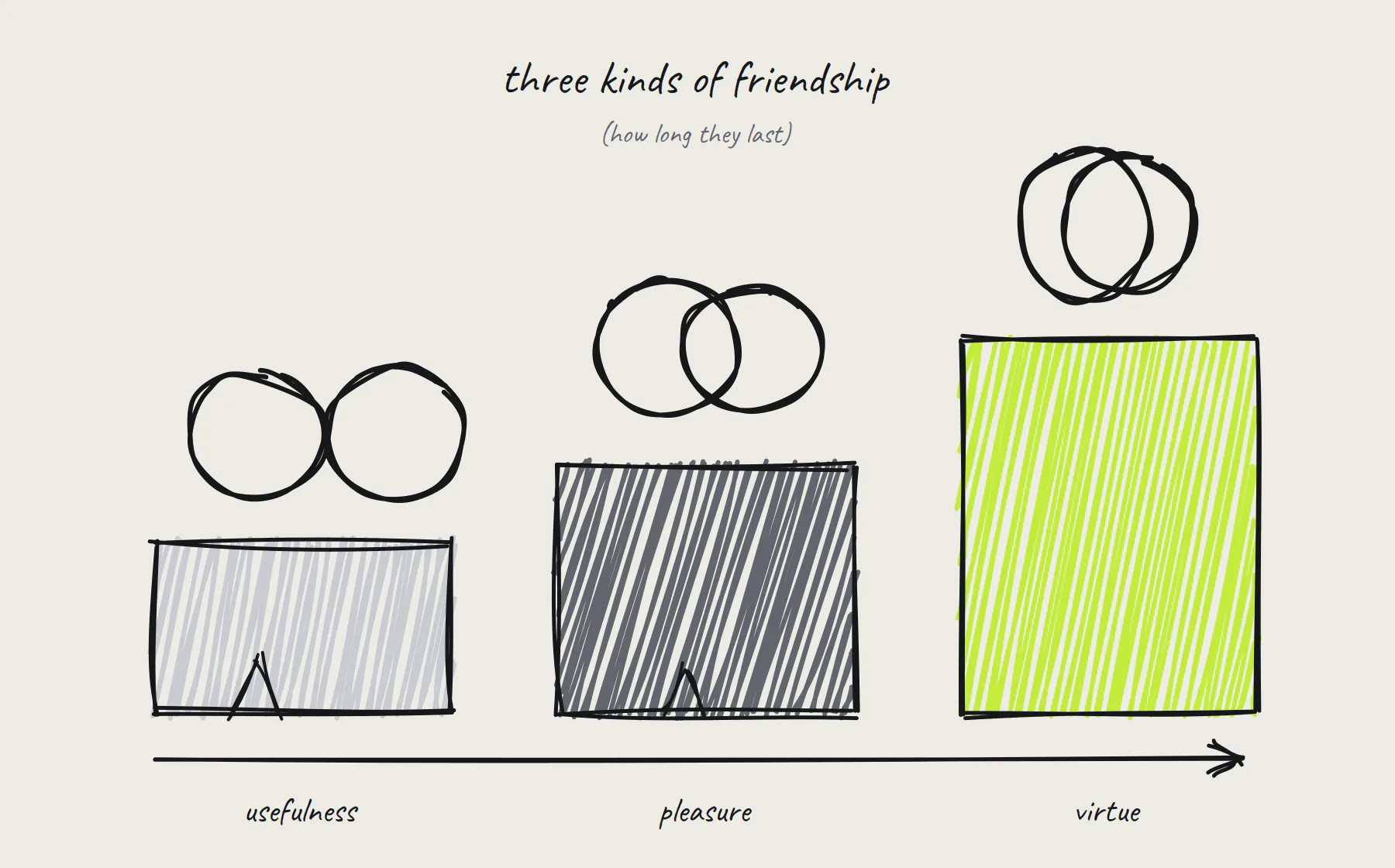
Friendships of usefulness exist because of what we trade: the colleague, the neighbour, the man who knows a man. Perfectly honest friendships. But the warmth belongs to the arrangement, not the person. When the job ends, or the house is sold, the friendship does not break. It simply runs out of reasons.
Friendships of pleasure are built on enjoyment: the people we laugh with and lose entire evenings to. These feel like they will last forever, and that is exactly their weakness. They are tied to a version of you. Keep growing, and one day you are surrounded by people you love, feeling strangely alone.
Friendships of virtue are the rare third kind: attached to who a person is, not what they provide. Aristotle believed only these survive change, because they were never leaning on circumstance in the first place. Most of us have one or two, if we are lucky.
The Fourth Kind
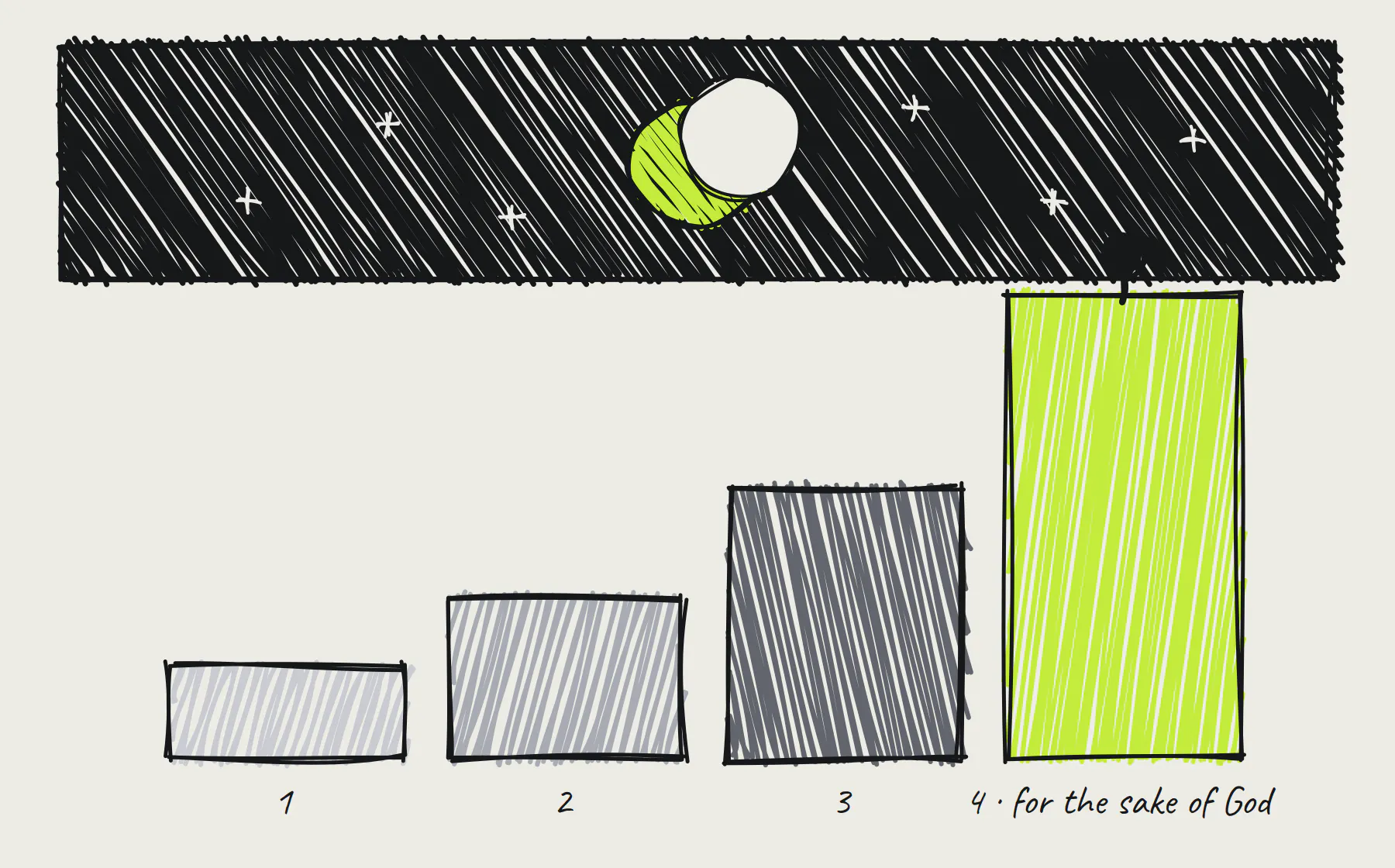
Centuries later, Muslim thinkers like Ibn Miskawayh and al-Ghazali read Aristotle, nodded along, and added a level he never imagined: friendship for the sake of God, where two people help each other become who they were meant to be. The Quran hints at the same expiry date the philosophers saw: on the Last Day, close friends will turn into enemies, except the righteous (43:67) [2]. Friendships of convenience run out; only the ones anchored in something higher cross over.
The Seven-Year Expiry Date
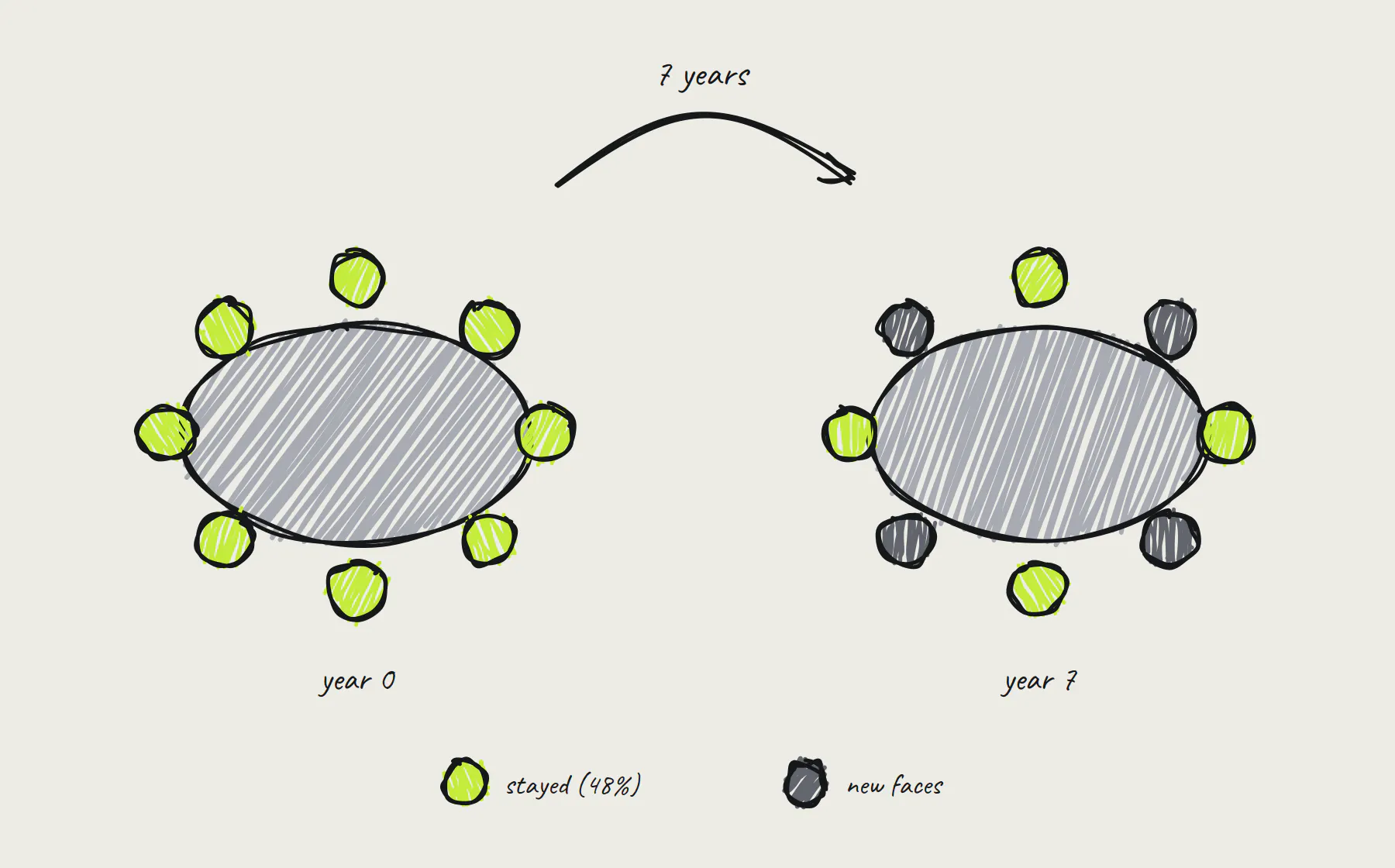
Science eventually put numbers on all this. A Dutch sociologist, Gerald Mollenhorst, surveyed about a thousand people, then knocked on their doors again seven years later [3]. Half of their close friends were gone. No betrayals, no dramatic exits, just jobs changed, neighbourhoods changed, and the friendships drifted out with the tide.
The strangest finding: the size of everyone's circle stayed exactly the same. New people had quietly taken the old seats at the table. We are not losing friends, it turns out. We are running a slow, polite exchange programme.
Your Brain Has a Guest List
Why does the circle stay the same size? Because the size was never up to us.
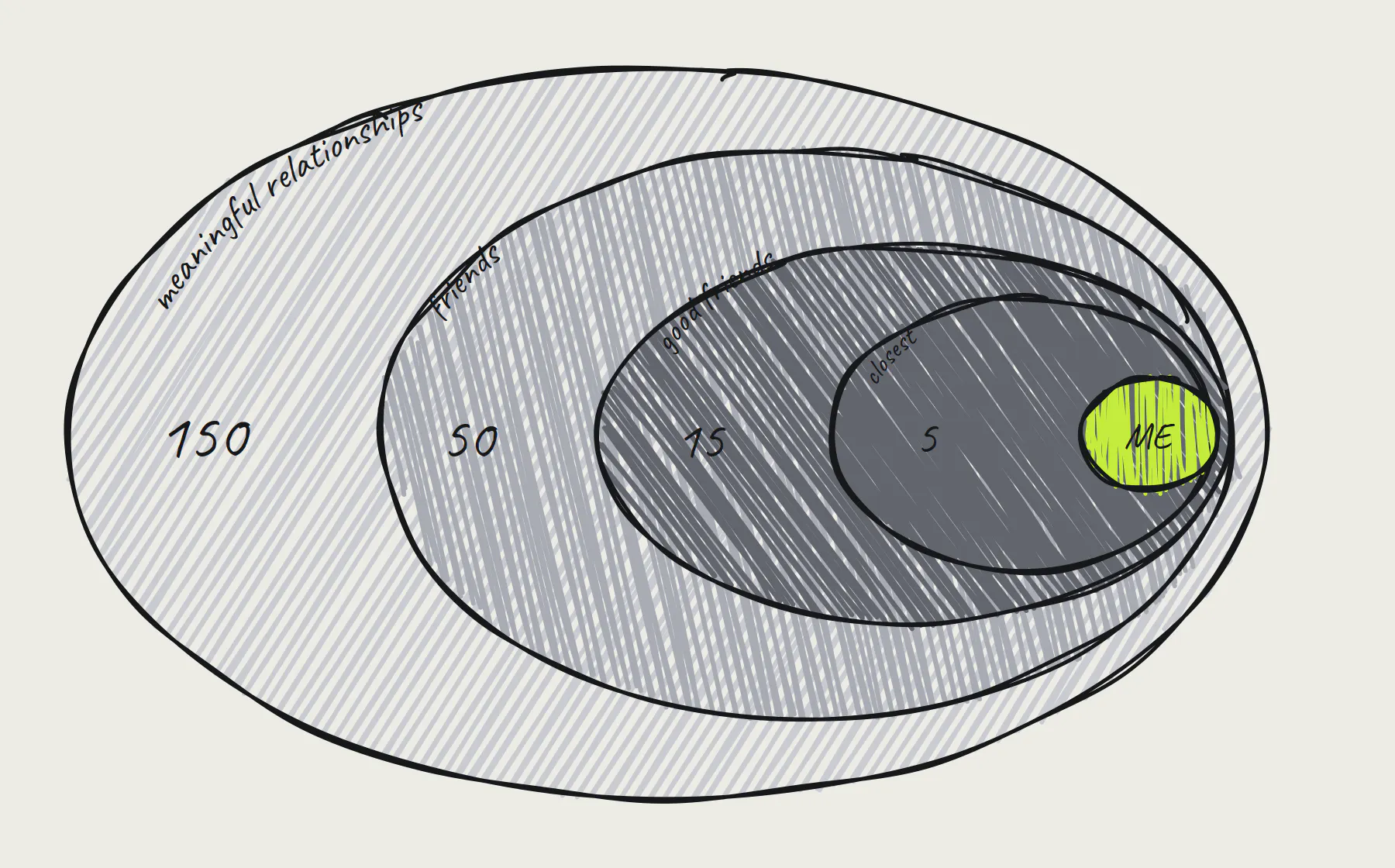
Evolutionary psychologist Robin Dunbar compared primate brains to their group sizes and found that the human brain maxes out at roughly 150 meaningful relationships [4]. Not 150 followers, 150 people whose story you actually know. And inside that limit, our relationships arrange themselves into layers, each about three times bigger than the last:
The 5: your shoulder-to-cry-on people. The ones you call at 2 a.m. from a hospital corridor, or when the news is too big to hold alone. This layer eats most of your emotional energy, and there is genuinely no room for a sixth. When someone new enters, a spouse, usually, someone else quietly slides out.
The 15: your sympathy group. The friends whose death would genuinely wreck you for weeks. You see them often, you know their parents' names, their kids' school problems, their quiet fears.
The 50: your party layer. The people you would invite to a big dinner or a wedding without hesitating. Real affection, but you could go three months without talking, and nothing would break.
The 150: your tribe. Everyone you meaningfully know. Invite them all to your funeral; Dunbar half-jokes that this is the one event where the whole list shows up.
Beyond that sit about 500 acquaintances and 1,500 faces you can put a name to. But those are not friendships. That is just memory.
Here is what struck me most: the layers are not fixed seats; they are an escalator moving downward. Dunbar found that a close friendship, left unattended, starts sliding to the outer layers within months. Family survives neglect; friendship does not. Nobody has to put the fire out. You just have to stop adding wood.
And what holds someone in a layer? Dunbar counts seven pillars: the way you speak, where you grew up, your educational path, your hobbies, your musical taste, your sense of humour, and your worldview (moral, religious, political) [4]. The more pillars you share, the closer the bond. After ten years, you and your friends may still share the language and the jokes. It is the heaviest pillar — worldview — that shifts underneath while nobody is watching.
Rebuilding, by the way, is brutally expensive. Researcher Jeffrey Hall calculated it takes about 200 hours of shared time to turn a stranger into a close friend [5]. As adults, we do not have 200 spare hours lying around, which is exactly why we cling to fading friendships long after the pillars have crumbled. The replacement cost is real.
Friends of the Road, Friends of the Heart
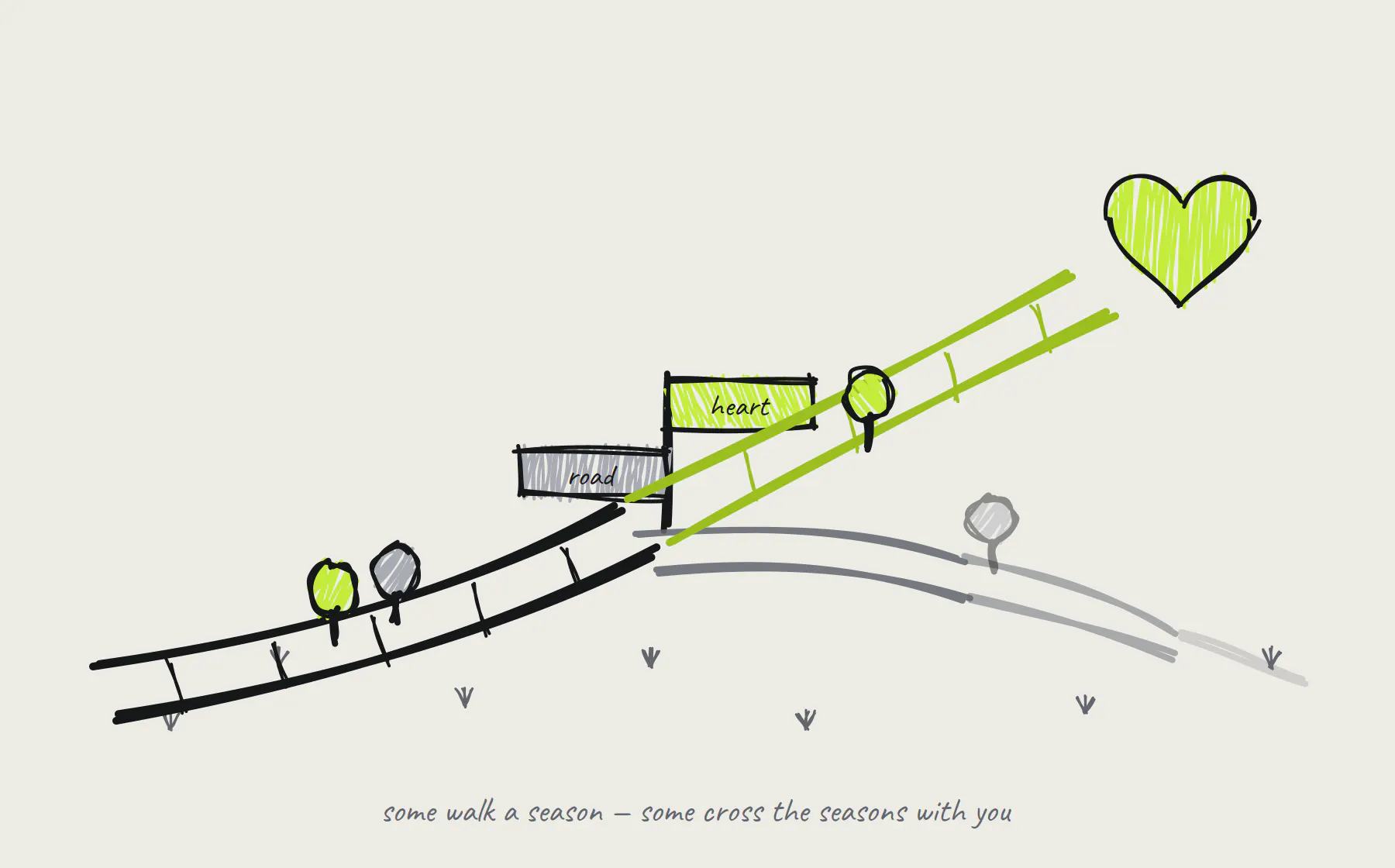
Sociologists have a gentler way of putting all this. Some people are friends of the road; they walk one season of life with you, and the season is the friendship. Others are friends of the heart, who cross seasons with you.
The mistake is expecting every friend of the road to be a friend of the heart. Then their departure feels like betrayal, when really the road just forked.
What Remains
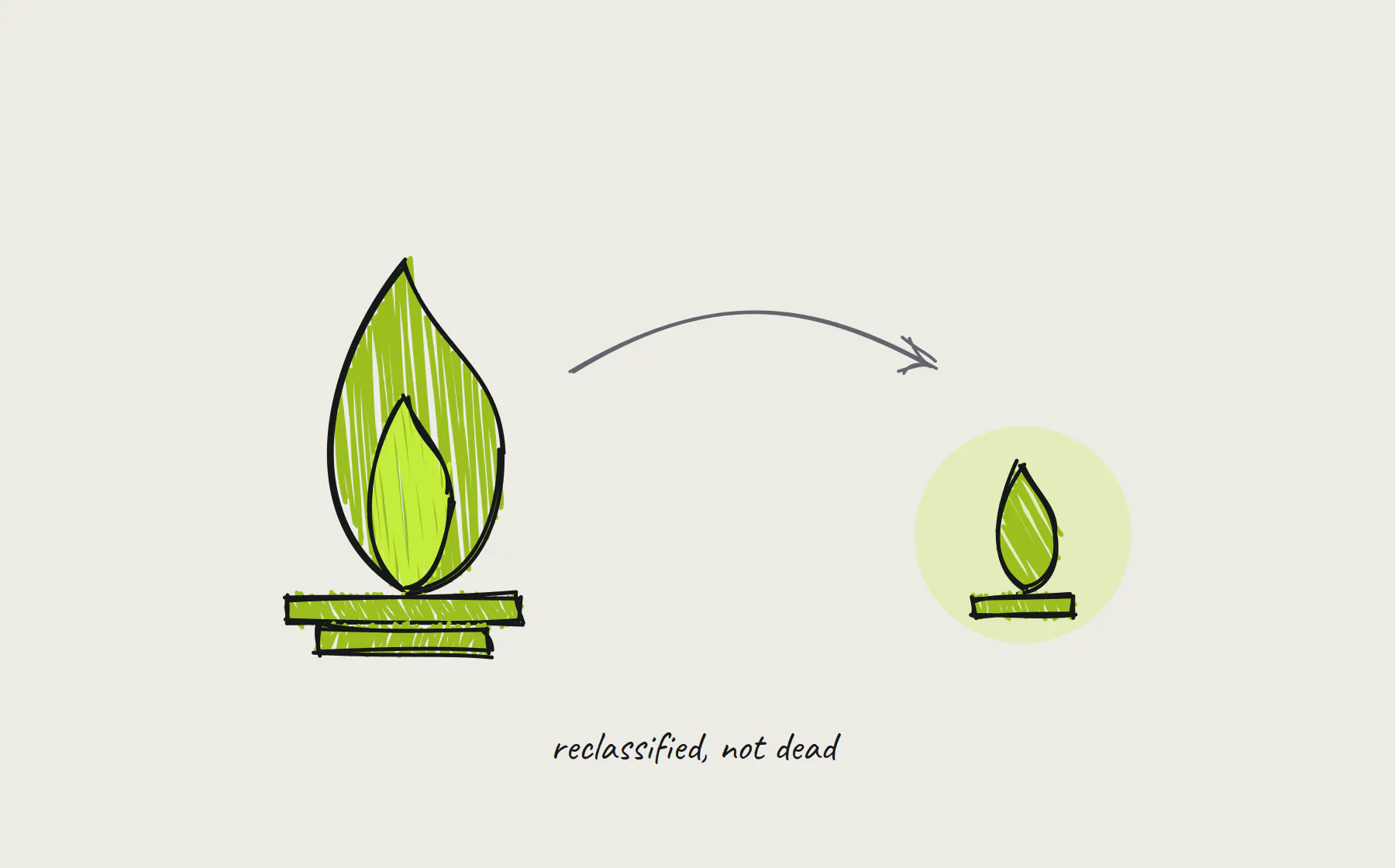
So I have stopped auditing my old friendships for failure. A friendship that becomes lighter has not died; it has been reclassified. An occasional call instead of a weekly one. Real warmth, smaller dose.
The people at that table gave you ten good years. You do not owe them a version of yourself that no longer exists. Neither do they owe you one.
Some friendships are meant to be outgrown. That is not the sad part of the story. That is proof there was growth.
References & Further Reading
[1] Aristotle, Nicomachean Ethics, Books VIII–IX (the three kinds of friendship) — full text at MIT Classics
[2] The Quran, Surah Az-Zukhruf 43:67 — quran.com/43/67; see also Ibn Miskawayh, Tahdhib al-Akhlaq, and al-Ghazali, Ihya Ulum al-Din (Book on the Duties of Brotherhood)
[3] Gerald Mollenhorst (Utrecht University), study on network turnover over seven years — ScienceDaily summary
[4] Robin Dunbar, "The Social Brain Hypothesis," Evolutionary Anthropology (1998), and Friends: Understanding the Power of Our Most Important Relationships (2021) — source of Dunbar's number, the friendship layers, and the seven pillars
[5] Jeffrey A. Hall, "How Many Hours Does It Take to Make a Friend?" Journal of Social and Personal Relationships (2018) — journal article